Skip to content
Palazzo Architecture
Christopher Grant Kirwan

Principal Architect

Christopher Grant Kirwan

Architecture should join lifestyle, place, and identity with the value of how a project is developed.

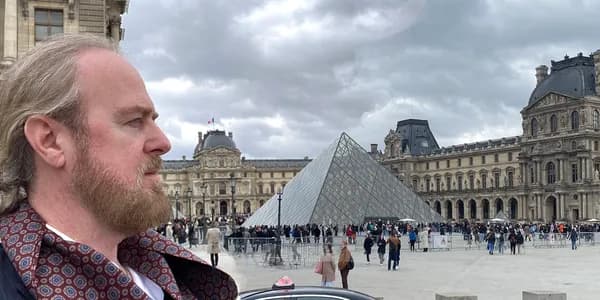
Christopher Grant Kirwan is an architect, designer, and founder of Kirwan Design, established in New York in 1995. His career spans more than 35 years of architecture, residential design, interiors, urban planning, and large-scale development across the United States, Europe, Asia, and the Middle East. He represents a multi-generational architectural lineage: following his father, Ernest Kirwan, he graduated from Rhode Island School of Design, continued graduate studies at MIT, and later taught at the Harvard Graduate School of Design and Parsons. He began in his father’s offices at sixteen, then worked with Ettore Sottsass, Rodolfo Machado and Jorge Silvetti, and Emilio Ambasz before founding his own practice. At Palazzo Architecture, he brings that integrated approach — design held together with lifestyle, place, identity, and how a project is developed — into the studio’s residential and hospitality work.

Published works

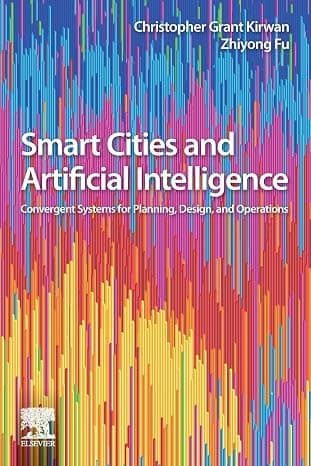
Smart Cities and Artificial Intelligence: Convergent Systems for Planning, Design, and Operations

Smart Cities and Artificial Intelligence: Convergent Systems for Planning, Design, and Operations

Smart Cities and Artificial Intelligence offers a comprehensive view of how cities are evolving as smart ecosystems through the convergence of technologies incorporating machine learning and neural network capabilities, geospatial intelligence, data analytics and visualization, sensors, and smart connected objects. These recent advances in AI move us closer to developing urban operating systems that simulate human, machine, and environmental patterns from transportation infrastructure to communication networks. Exploring cities as real-time, living, dynamic systems, and providing tools and formats including generative design and living lab models that support cities to become self-regulating, this book provides readers with a conceptual and practical knowledge base to grasp and apply the key principles required in the planning, design, and operations of smart cities.

View

Cities as Convergent Autopoietic Systems

The aim of this paper is to explore the epistemological evolution of systems thinking, from cybernetics to autopoiesis and anticipatory systems in search of common characteristics, themes, and behaviors that define living, intelligent systems. Building on this theoretical foundation, we seek to establish the guiding principles behind a new bio-determinist paradigm for the future design and operations of complex urban systems (smart cities). We introduce the concept and vision of Autopoietic Operating Systems (AOS) to describe the total convergence of autopoietic properties required to manage diverse urban functions (Smart Environment, Smart Economy, Smart Mobility, Smart Governance, Smart People, and Smart Living) and the mechanisms that will enable cities to become intelligent, self-regulating ecosystems, coexisting in harmony with the natural environment.

View

Defining the Middle Ground: A Comprehensive Approach to the Planning, Design and Implementation of Smart City Operating Systems

As cities have become more sophisticated with the introduction of advanced information technology and with the widespread use of social media, there is a need to identify a middle ground (or connective mode) which links the operating systems of the city with its citizens. In order to develop a new viable model for Smart City operating systems, an in-depth understanding of key drivers of the city will be required. This process must simultaneously integrate both top-down and bottom-up data streams to allow operating systems to grow organically and sustainably, with the following goals: (1) Permit city leaders to make more informed decisions, (2) Create an open development environment that will encourage private enterprise to infuse capital, technology and innovative business solutions, (3) Allow citizens to participate in the operation and management of their communities. The primary objective of this paper is to define the required methodology to plan, design and implement appropriate solutions to City DNA through the use of an integrated “Middle Ground” approach.

View

Smart Asia: A New Platform for Collective Intelligence

Asia today is experiencing unprecedented urban growth and development, fast becoming the world’s leading consumer of the planet’s natural resources, and is now at the tipping point of becoming unsustainable. North America and Europe have finally begun to slow this negative trend through the use of sustainable practices and social innovation models supported by advanced technologies. It is critical for Asia to follow suit by developing environmentally safe solutions for growth, following the best practices from countries around the world. To be successful, this will require willing collaboration by public and private organizations, sharing information on demographics, health, food, water, weather, transportation, and other key urban indices. By developing a virtual framework combining an open-source operating system and collaborative interface we term Collective Intelligence, the goal is to build a Smart Asia platform capable of providing a holistic solution to meet both human quality of life needs and the sustainability of the natural environment.

View

Have a property, idea, or project in mind?

Begin with architecture. Palazzo will carry the work through visualization, engineering, and construction when the project requires it.